Erectile Dysfunction • PDE5 Inhibitor

Sildenafil Practical Guide: Timing, Onset, Duration & Real‑World Use

Sildenafil is a well‑established PDE5 inhibitor designed to support men who need a predictable, clinically validated response. This practical guide explains how sildenafil works in everyday scenarios and helps you understand the key factors that influence its effectiveness — including timing, onset, duration, food interaction, alcohol interaction, common mistakes, and troubleshooting when it’s not working.

Learn how sildenafil behaves in specific groups such as older men and people with diabetes, and understand the practical considerations that shape real‑world outcomes.

Sildenafil Timing Overview
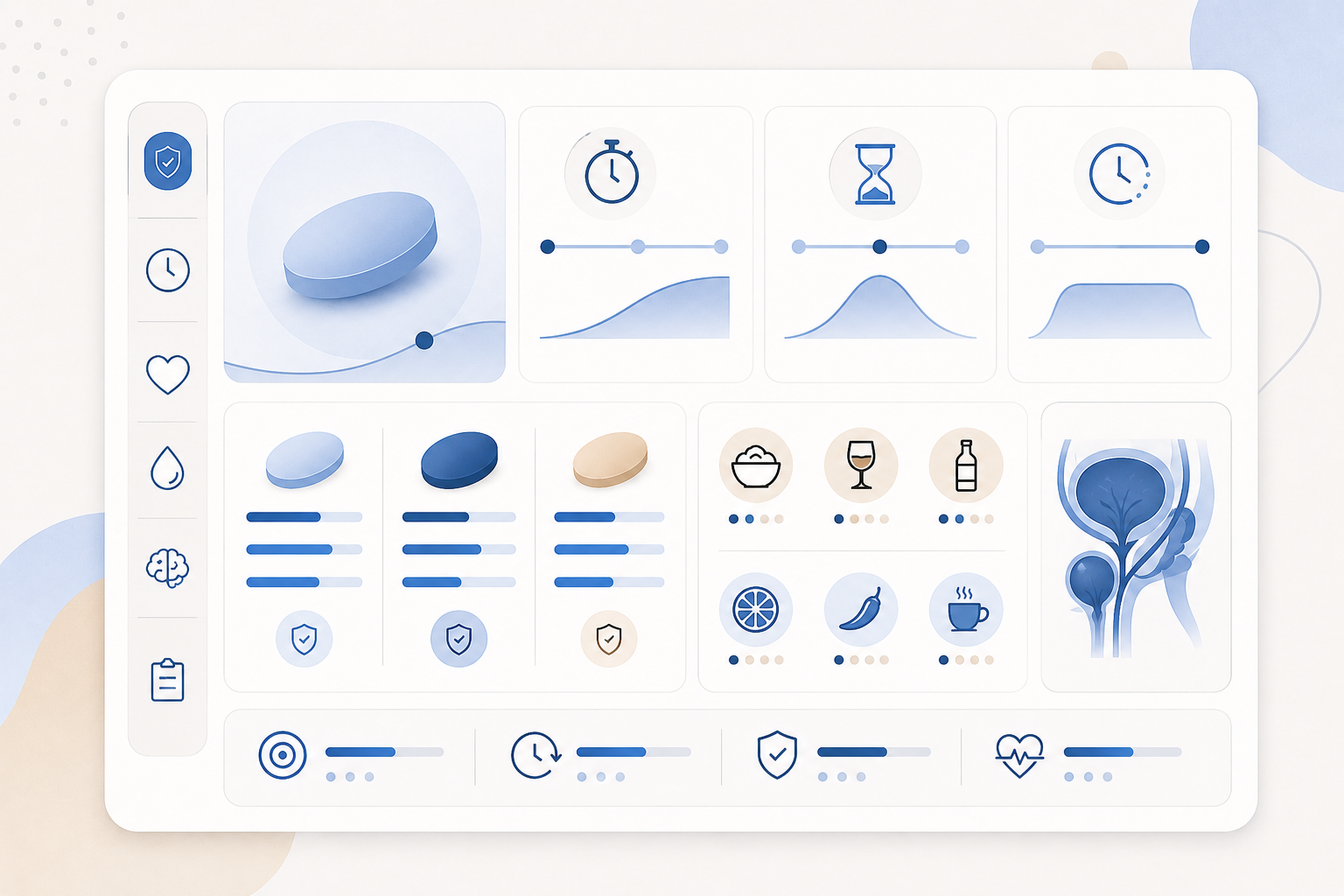
Sildenafil Overview

Understanding the correct timing of sildenafil is essential for achieving a predictable and effective response. Most men take the medication approximately 30–60 minutes before sexual activity, but real‑world timing windows vary widely. Factors such as gastric emptying, food intake, age‑related pharmacokinetics, and comorbidities can shift the onset window, making timing a personalized parameter rather than a fixed rule. A detailed breakdown is available on the dedicated Sildenafil Timing page.

Timing differences often arise from individual metabolism, meal composition, and the presence of alcohol. Heavy meals may delay absorption, while early intake may cause the effect to peak too soon. Common mistakes include taking sildenafil immediately after eating, assuming onset is instantaneous, or misinterpreting early vascular sensations as full efficacy. Correcting these timing‑related errors significantly improves consistency and overall treatment outcomes.

Beyond these core factors, informational sources frequently highlight the role of situational variability — stress, anticipation, hydration, and even circadian rhythms can subtly influence how quickly sildenafil begins to work. Users often report that timing becomes more predictable once they establish a stable routine: consistent meal patterns, avoiding high‑fat foods before dosing, and aligning intake with expected activity windows. This practical, experience‑based optimization is commonly referenced across patient guides and contributes to more reliable real‑world results. Additional insights can be found in related sections such as Onset, Duration, and Food Interaction.

Timing Window Typical Range Notes
Recommended Intake 30–60 minutes before activity Most predictable onset; avoid heavy meals
Delayed Onset 60–120 minutes Often linked to high‑fat meals or slower metabolism
Early Intake 90–180 minutes before activity May cause peak effect to pass before needed

Sildenafil Onset Overview

Onset refers to the time it takes for sildenafil to begin producing a noticeable erectile response. Most users experience onset within a standard 30–60‑minute window, but real‑world ranges vary. A detailed breakdown is available on the dedicated Sildenafil Onset page.

Several factors influence how quickly sildenafil starts working. Food—especially high‑fat meals— can slow gastric emptying and delay absorption. Alcohol may reduce vascular responsiveness and extend onset time. Individual metabolism also plays a major role: faster metabolizers may feel effects earlier, while slower metabolizers may require more time for the drug to reach effective plasma levels. These variations explain why onset can be fast in some situations and noticeably slower in others.

Onset Category Typical Time Influencing Factors
Fast Onset 15–30 minutes Empty stomach, rapid metabolism
Standard Onset 30–60 minutes Typical absorption conditions
Slow Onset 60–120 minutes High‑fat meals, alcohol, slower metabolism

Sildenafil Duration Overview

Duration describes how long sildenafil remains effective after onset. Most users experience a functional window of 4–6 hours, but individual duration ranges can differ significantly. A full explanation is available on the Sildenafil Duration page.

Duration varies due to metabolic rate, vascular sensitivity, food intake, and alcohol use. Faster metabolizers may experience a shorter window, while slower metabolizers or those with enhanced vascular responsiveness may notice extended duration. Heavy meals and alcohol can reduce peak intensity, indirectly affecting how long the effect feels meaningful. These differences highlight why duration is not fixed and can shift from one situation to another.

Duration Range Typical Window Notes
Short 2–4 hours Fast metabolism, reduced vascular response
Standard 4–6 hours Most common duration under typical conditions
Extended 6–8 hours Slower metabolism, strong vascular sensitivity

Food & Alcohol Interaction

Food—especially high‑fat meals—has a major impact on how sildenafil is absorbed. Heavy meals slow gastric emptying, delay the drug’s entry into the bloodstream, and often push onset far beyond the expected window. Standard meals create milder delays, but still reduce peak intensity compared to taking sildenafil on an empty stomach. A detailed breakdown is available on Sildenafil & Food.

Alcohol affects sildenafil differently: it does not significantly change absorption, but it reduces vascular responsiveness and can weaken the perceived effect. Light drinking may cause mild delays, while moderate or heavy drinking often leads to weaker erections, slower onset, and inconsistent results. More scenarios are covered on the Sildenafil & Alcohol page.

Interaction Type Effect Typical Outcome
High‑Fat Meal Strong delay in absorption Onset pushed to 60–120 minutes; weaker peak
Standard Meal Mild delay Onset slightly slower; moderate reduction in intensity
Alcohol Reduced vascular response Weaker effect; inconsistent performance

Mistakes & Troubleshooting

Most issues with sildenafil stem from predictable mistakes rather than true medication failure. Common errors include taking the drug immediately after a heavy meal, expecting an erection without sexual stimulation, using alcohol alongside sildenafil, or misjudging the correct timing window. These factors frequently lead to weak or absent effects. More detailed guidance is available on Sildenafil Mistakes and Sildenafil Not Working.

Weak or absent response often occurs when onset is delayed by food, when alcohol reduces vascular sensitivity, or when stimulation is insufficient. Some users also take sildenafil too early, causing the peak effect to pass before sexual activity. Troubleshooting typically involves adjusting timing, avoiding high‑fat meals, reducing alcohol intake, and ensuring adequate stimulation. Understanding these patterns helps prevent unnecessary dose escalation and improves consistency.

Issue Common Cause General Informational Note
No Effect Wrong timing; insufficient stimulation Often resolved by adjusting intake window
Weak Effect Food or alcohol interference Empty stomach improves consistency
Delayed Onset High‑fat meal; slower metabolism Wait 2–3 hours after eating

Sildenafil Use in Specific Groups

Sildenafil behaves differently in certain populations, particularly older men and individuals with diabetes. Age‑related changes in metabolism, vascular elasticity, and comorbidities can influence onset and duration. Older men may experience slower absorption and slightly reduced peak intensity. More details are available on Sildenafil for Older Men.

People with diabetes often face additional challenges such as endothelial dysfunction, reduced nitric‑oxide signaling, and variable vascular responsiveness. These factors can affect both onset and overall effectiveness. Practical guidance is provided on the Sildenafil & Diabetes page.

Group Common Considerations Notes
Older Men Slower absorption; reduced vascular elasticity May require stricter timing control
Diabetes Endothelial dysfunction; variable response Effect may be weaker; optimization needed

Frequently Asked Questions

Most users take sildenafil about 30–60 minutes before sexual activity, allowing enough time for the drug to reach effective plasma levels. This window supports predictable absorption and ensures the medication aligns with natural stimulation. Individual timing may vary depending on metabolism, meal timing, and personal response patterns.

Onset varies because absorption and vascular responsiveness differ from person to person. Factors such as gastric emptying speed, metabolic rate, meal composition, and alcohol intake influence how quickly sildenafil becomes active. These variations explain why some users experience rapid onset while others notice a slower, more gradual effect.

Yes, food—especially high‑fat meals—can noticeably delay absorption by slowing gastric emptying. This often shifts onset to a later window and reduces peak intensity. While standard meals cause milder delays, taking sildenafil on an empty stomach generally results in faster, more consistent absorption and a more predictable experience.

Alcohol can reduce the perceived effect by lowering vascular responsiveness and diminishing erectile quality. While it does not significantly change absorption, even moderate drinking may weaken the overall experience. Users often report slower onset, reduced firmness, and less consistency when alcohol is combined with sildenafil.

Frequent mistakes include taking sildenafil immediately after a heavy meal, expecting results without stimulation, misjudging timing, or combining it with alcohol. These issues often lead to weak or delayed effects. Understanding how timing, food, and stimulation interact helps users achieve more consistent and predictable outcomes.

Duration varies due to metabolism, vascular sensitivity, meal timing, and overall physiological response. Some users experience shorter windows because of rapid metabolism, while others notice extended duration linked to slower clearance. These informational factors help explain why sildenafil’s effect can last anywhere from several hours to longer periods.