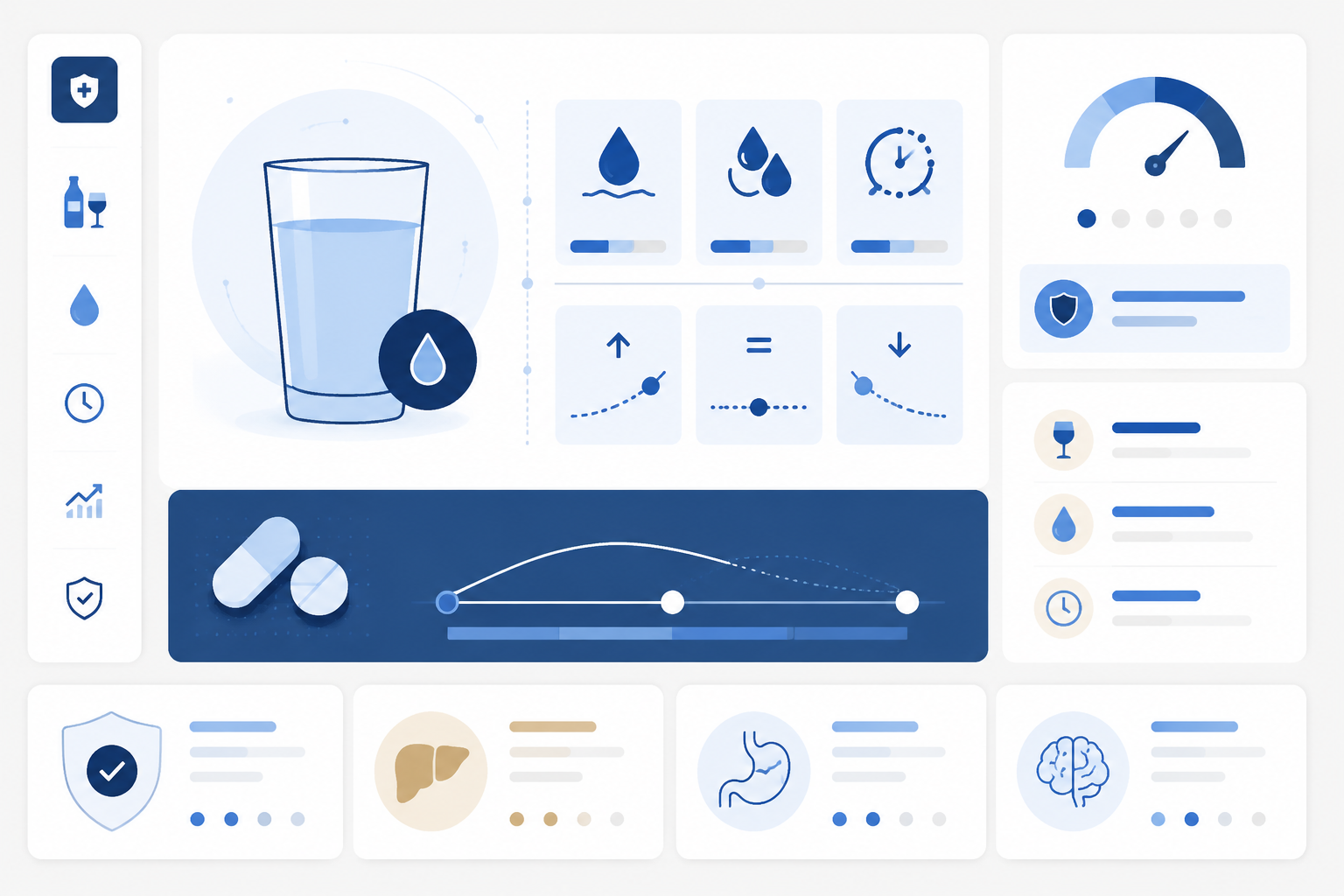
This page focuses on tadalafil alcohol interaction — how drinking influences the perceived effect of tadalafil, why tadalafil with alcohol is frequently discussed in informational sources, and what users typically report in real‑world scenarios. Alcohol can shift onset perception, alter vascular response, and change how predictable the effect feels, especially in moderate‑to‑heavy drinking situations.
Explore timing guidance in Tadalafil Timing, onset details in Onset, and duration insights in Duration. Food interaction is covered in Food, troubleshooting in Not Working, flexible use patterns in Daily vs On‑Demand, long‑term considerations in Long‑Term, and younger‑men guidance in Younger Men.
Alcohol can influence how users perceive the effect of tadalafil, mainly by altering vascular response and shifting subjective onset. While tadalafil is generally less affected by alcohol than sildenafil, drinking can still modify how predictable the effect feels. Informational sources frequently mention this interaction because many users combine tadalafil with social drinking, creating varied real‑world scenarios. These differences often relate to onset and duration, especially when alcohol intake is moderate or heavy.
Light drinking typically produces only mild changes, and many users report stable performance with minimal perceived reduction. Moderate drinking can introduce more noticeable variability, including a slight shift in onset or reduced subjective intensity. Heavy drinking has the strongest impact, commonly described as a clear reduction in perceived effect. These patterns reflect alcohol’s general influence on circulation and responsiveness rather than a direct pharmacokinetic interaction.
Understanding these drinking levels helps users interpret inconsistent experiences and distinguish alcohol‑related variability from other factors discussed in Not Working. For broader context, see timing guidance in Tadalafil Timing and food interaction insights in Food.
| Alcohol Level | Impact on Effect | General Notes |
|---|---|---|
| Light drinking | Mild reduction | Perception varies |
| Moderate drinking | Noticeable reduction | Onset may shift |
| Heavy drinking | Stronger reduction | Common informational note |
Alcohol can influence how quickly tadalafil feels like it is starting to work, mainly by affecting vascular responsiveness and altering subjective perception of onset. Light drinking usually produces only a mild delay, while moderate drinking can shift onset more noticeably. Heavy drinking has the strongest effect, often described as slower or less predictable onset. These patterns are frequently mentioned in informational sources because many users combine tadalafil with social drinking.
Alcohol’s impact on onset is also connected to metabolism and meal timing. Drinking after a heavy meal may amplify delays, while drinking on an emptier stomach may create more variable perception. Although tadalafil is generally stable, alcohol can still introduce subtle timing changes that users may interpret as slower response. More detailed onset guidance is available on the Onset page.
Overall, alcohol does not drastically change tadalafil’s pharmacokinetics, but it can shift how onset feels in real‑world situations. Understanding these patterns helps users interpret occasional variability without assuming a major interaction.
| Scenario | Typical Onset Change | Notes |
|---|---|---|
| Light drinking | Mild delay | Perception varies |
| Moderate drinking | Moderate delay | Common informational pattern |
| Heavy drinking | Stronger delay | Absorption may slow |
Alcohol can also influence how long tadalafil feels effective, mainly by altering perceived duration rather than changing the drug’s actual pharmacological window. Early drinking — before taking tadalafil — may reduce perceived duration because onset shifts slightly. Drinking during the effect window can create moderate reduction, often described as weaker or less sustained response. Drinking after onset typically produces only mild changes.
These patterns appear frequently in informational sources because users often mix tadalafil with social drinking. Importantly, duration is not the same as onset: even if onset feels slower, the extended activity window of tadalafil usually remains intact. Perceived duration changes are more about subjective experience than major pharmacokinetic shifts.
Understanding these scenarios helps users interpret variability without assuming tadalafil stops working earlier than expected. These insights complement broader timing guidance and clarify why some drinking patterns feel different in practice.
| Scenario | Impact on Duration | General Notes |
|---|---|---|
| Alcohol before intake | Reduced perceived duration | Onset may shift |
| Alcohol during effect | Moderate reduction | Perception varies |
| Alcohol after onset | Mild reduction | Less impact |
Informational sources frequently highlight common mistakes users make when combining tadalafil with alcohol. Heavy drinking is the most typical issue: many users underestimate how strongly alcohol can influence perceived effect, leading to weaker or slower response. Another mistake is ignoring timing — assuming alcohol has no impact regardless of when it is consumed. In reality, drinking too close to intake can shift onset noticeably.
A third mistake involves combining alcohol with fatty meals. Because both alcohol and high‑fat foods can introduce mild delays, their effects may overlap, creating a more noticeable slowdown. These patterns appear often because social drinking and heavy meals frequently occur together, especially in evening scenarios.
Users who experience inconsistent onset or reduced perceived effect can explore detailed guidance on the Not Working page, where broader timing, food interaction, and lifestyle factors are explained. Understanding these mistakes helps clarify why some drinking patterns feel different even though tadalafil itself remains stable.
| Mistake | Common Cause | General Informational Note |
|---|---|---|
| Heavy drinking | Misjudged interaction | Effect may weaken |
| Ignoring timing | Underestimating alcohol impact | Onset may shift |
| Combining with fatty meal | Overlapping delays | Absorption slows |
Alcohol can reduce the perceived effect of tadalafil by influencing vascular responsiveness and altering how consistent the response feels. Light drinking usually causes only mild changes, while heavier drinking may make the effect feel weaker or less predictable. These patterns are commonly mentioned in informational sources discussing real‑world use.
Alcohol can introduce a delay in perceived onset, but the effect is usually mild to moderate. Light drinking may shift onset slightly, while heavier drinking can make the start feel slower or less defined. Informational sources often note this pattern because alcohol affects circulation and subjective timing more than core pharmacokinetics.
Drinking mainly affects perceived duration rather than tadalafil’s actual activity window. Alcohol before intake may shorten how long the effect feels noticeable, while drinking during the window can reduce perceived intensity. These changes reflect subjective experience rather than major shifts in tadalafil’s long duration profile.
Yes, light drinking is frequently mentioned because many users combine tadalafil with social alcohol intake. Informational sources typically describe light drinking as producing only mild variability, with most users experiencing stable onset and effect. It is often contrasted with moderate or heavy drinking, which can create more noticeable changes.
Common mistakes include heavy drinking, ignoring timing, and combining alcohol with fatty meals. These patterns often lead to slower onset or weaker perceived effect. Informational sources highlight them because they frequently occur in real‑world scenarios where drinking and eating overlap, creating layered timing variability.
Combining alcohol with a fatty meal can shift the perceived effect window by introducing overlapping delays. Both factors may slow onset slightly, making the response feel less predictable. While the core duration remains stable, users may notice timing changes that reflect combined lifestyle influences rather than strong pharmacological interaction.